Safety stock for small shops: how much buffer is enough
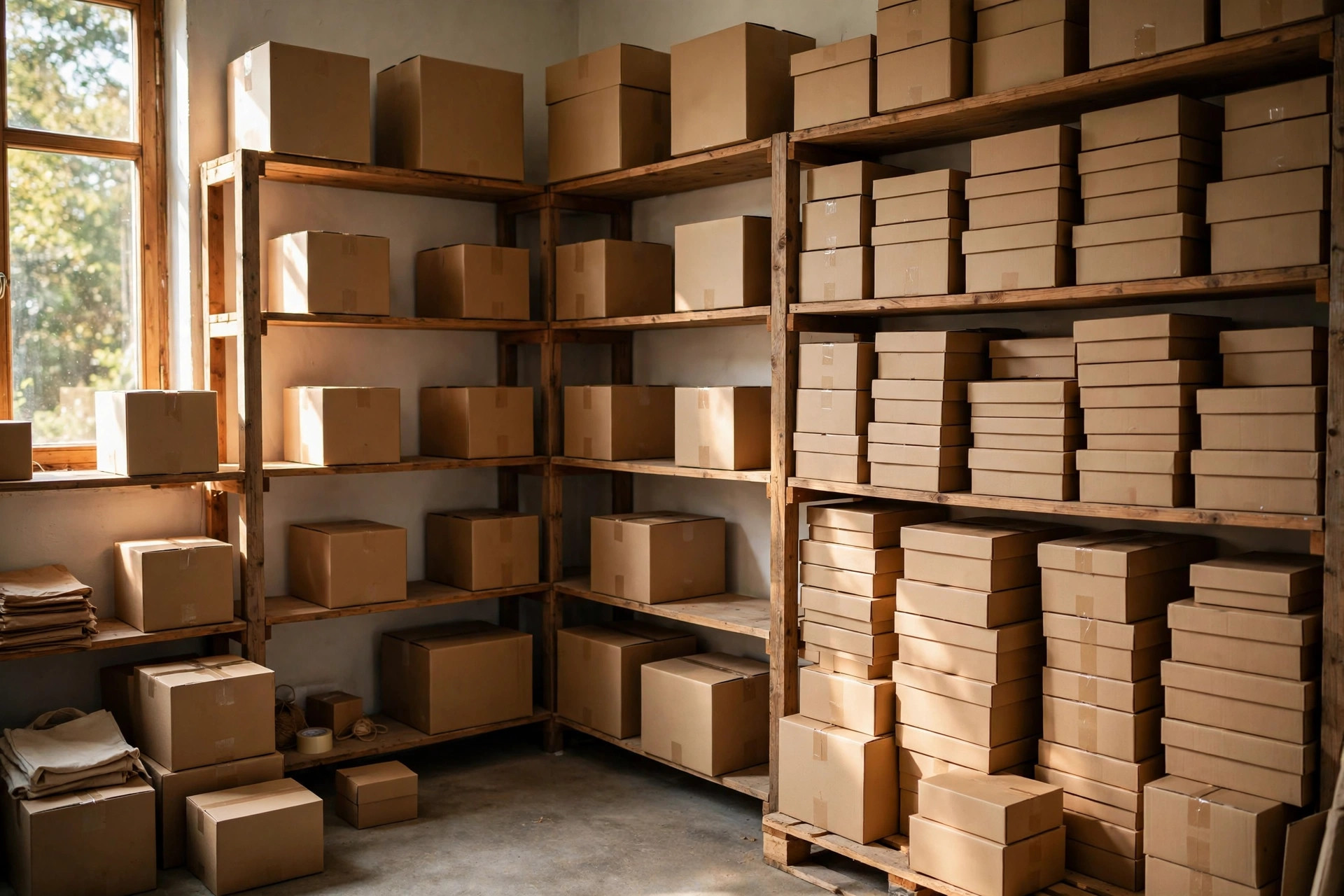
Safety stock is the extra inventory you hold on purpose, the buffer between "selling normally" and "the shelf is empty while the delivery is still two days out." Every retailer holds some, whether they calculated it or just got nervous once and started ordering extra. The difference between a deliberate buffer and an accidental one is money: a buffer sized by a formula costs what it costs for a reason, while a buffer sized by anxiety quietly turns into overstock, tied-up cash, and eventually dead stock. This guide covers the two calculations a small shop can run with nothing more than sales history and delivery records, one fully worked example priced in dollars, and a simple framework for deciding which items deserve a buffer at all.
What safety stock is, and what it is not
Safety stock, also called buffer stock, is the surplus you keep to absorb surprises: a week when an item sells faster than usual, or a supplier delivery that arrives late. Shopify's retailer guide puts it plainly, safety stock is additional inventory held in case of fluctuations in demand and supply. It is not the same thing as a reorder point. The reorder point is the stock level that triggers your next order; safety stock is the cushion sitting underneath it, the stock you plan not to touch in a normal week. If you find yourself dipping into the buffer regularly, the buffer is not the problem, your reorder point or your lead-time estimate is.
The buffer exists because both halves of the equation wobble. Demand wobbles: local events, weather, a competitor closing, or a social-media mention can spike sales of one item for a few days. Supply wobbles: materials shortages, manufacturing delays, and transport problems can stretch a reliable five-day delivery into nine. Safety stock buys you selling days while either wobble works itself out. What it cannot do is fix a permanently slow supplier or a permanently wrong sales estimate, those need new numbers, not a bigger cushion.
The two calculations a small shop can run today
Guides aimed at large retailers list half a dozen formulas, including statistical versions built on standard deviations and service-level Z-scores. Those are legitimate tools, but they assume data most small shops do not keep. Two methods need only numbers you already have: your average and busiest daily sales for an item, and your supplier's average and slowest delivery times. Both figures come from the same two places, your point-of-sale sales history and your purchase-order records of when deliveries actually arrived.
Method 1: the standard formula. The most widely published version, carried by Shopify, RELEX, and Business.org in the same form, is:
Safety stock = (maximum daily usage × maximum lead time) − (average daily usage × average lead time)
In words: work out the most you could plausibly sell during the slowest delivery you have actually experienced, subtract what you would normally sell during a normal delivery, and hold the difference. It protects you against the bad week and the late truck arriving together, which is exactly the combination that causes stockouts.
Method 2: fixed days of cover. Pick a number of extra days, two, three, a week, and hold that many days' worth of average sales. Shopify's guide works this example: an item averaging 10 sales a day with a busiest day of 17, held at two weeks of cover, gives a fixed buffer somewhere between 140 and 238 units depending on whether you multiply by the average or the maximum day. Fixed cover is cruder, it ignores your supplier's lead time entirely, but it takes thirty seconds per item and suits stock with steady demand and a reliable supplier.
One item, worked end to end, and what the buffer costs in cash
Take a typical small-shop item: a product that sells an average of 4 units a day, with a busiest day of 7. The supplier normally delivers in 5 days; the slowest delivery on record took 9.
- Standard formula: (7 × 9) − (4 × 5) = 63 − 20 = 43 units of safety stock.
- Three days of cover: 3 × 4 = 12 units.
Same item, same records, and the two methods disagree by 31 units. Neither is "wrong"; they are answering different questions. The formula assumes your worst sales day and your worst delivery happen in the same week. Days of cover assumes an ordinary week with a modest delay. The honest way to choose is to price the difference. At a wholesale cost of $6 a unit, the formula's buffer is $258 of stock sitting on the shelf; the days-of-cover buffer is $72. The gap is $186 for a single item. Run the same gap across thirty comparable items and it is roughly $5,580 of cash converted into buffer stock, money that is not available for rent, wages, or the fast-moving lines that actually earn. That is the real trade: every extra unit of safety stock is insurance, and like all insurance it has a premium. Sometimes the premium is worth it. The point is to pay it knowingly, item by item, instead of across the whole store by default.
One more check on the formula's answer: 43 units is nearly eleven days of average sales. For a shelf-stable staple, that may be fine. For anything with an expiry date, a fashion cycle, or a model year, an eleven-day buffer is how safety stock quietly becomes the dead stock you mark down in October.
Which items earn a buffer: a simple decision framework
Inventory planning guidance commonly sorts items into classes. A items (your best sellers and highest-margin lines), B items (steady mid-tier), and C items (the long tail), and notes that A items and high-margin SKUs earn higher protection while C items can run leaner. Translated into shop rules:
| Item type | Buffer approach | Why |
|---|---|---|
| Best sellers, high margin, customers ask by name | Standard formula, reviewed quarterly | A stockout here costs real sales and repeat visits; the insurance premium is justified |
| Steady sellers, reliable supplier, short lead time | Fixed days of cover (2 to 3 days) | Demand and supply barely wobble, so a small flat buffer covers the risk |
| Unreliable supplier or long, variable lead time | Standard formula, and fix the supplier problem | The formula's worst-case lead time is doing the work; a buffer is a bandage, not a cure |
| Perishables and dated/seasonal goods | Little or none | Unsold buffer expires or goes out of season; a short stockout costs less than a write-off |
| Cheap, slow C items with a next-day supplier | None, or a token few units | A one-day gap is a minor inconvenience; shelf space and cash are worth more |
If you later want finer control, the statistical route exists: planners set a target service level, the share of cycles with no stockout, and convert it with a standard Z table (90% service ≈ Z 1.28, 95% ≈ 1.65, 99% ≈ 2.33), then multiply by the variability of demand during lead time. One published example: a variability figure of 30 units at a 95% service level gives 30 × 1.65 = 49.5, rounded up to 50 units of safety stock. It is good machinery once your records are clean; it is not where a small shop needs to start.
Setting your safety stock: step by step
- Pick your first ten items. Your best sellers and the items customers ask for by name, not the whole store.
- Pull four numbers per item from your POS and delivery records for the last two to three months: average daily sales, busiest single day's sales, average delivery time in days, and the slowest delivery in days.
- Run the standard formula for each item: (busiest day × slowest delivery) − (average day × average delivery).
- Sanity-check the answer in days. Divide the result by average daily sales. If it implies more cover than the item's shelf life or season allows, cap it at what you can sell through in time and note why.
- Price it. Multiply the buffer by unit cost and write the dollar figure next to it. If the total across your ten items shocks you, trim the C items first, not the best sellers.
- Record it where ordering happens, the POS reorder screen or the stock spreadsheet, as buffer plus reorder point, so the trigger level already includes the cushion.
- Leave it alone for one full order cycle before judging it. A buffer tuned after every delivery is just guesswork with extra steps.
What success looks like: after a month, your ten items have not stocked out during a normal delivery delay, you have dipped into the buffer only on genuinely unusual days, and you can state, in dollars, what your total buffer costs. If an item stocked out anyway, the fix is in step 2's numbers (usually an optimistic lead time), not a reflexively bigger buffer.
Keeping buffers honest: the quarterly step-down review
Buffers creep upward and almost never downward, because every stockout is memorable and every quiet month is not. Planning guidance makes the mirror point about supply: even modest lead-time variability inflates the buffer a formula demands, so when a supplier stabilizes, the required buffer drops quickly, but only if you recalculate. Once a quarter, for your buffered items: re-run the formula on the newest three months of data; if a supplier has delivered on time for two straight quarters, let the buffer step down to the new figure instead of keeping the old scar tissue; and if an item's sales have halved, halve the buffer the same week, not next quarter. Every unit released is cash back in the business, that, not the formula, is the real payoff of doing this properly.
FAQ
Is safety stock the same as a reorder point? No. The reorder point is the level that triggers an order; safety stock is the cushion below it that you hold for fluctuations in demand and supply. Your effective trigger is normally reorder point including the buffer, order when stock falls to expected sales during lead time plus safety stock.
How much safety stock should a small store hold? There is no universal number of days. The worked example above shows the same item justifying 12 units by one method and 43 by another; the right answer depends on the item's margin, shelf life, and supplier reliability, which is why the decision framework, not a store-wide rule, is the tool to use.
Can safety stock be zero? For some items, deliberately yes, cheap, slow lines with a fast, reliable supplier. Zero as a blanket policy is different: it means every late delivery becomes an empty shelf. Choose zero item by item.